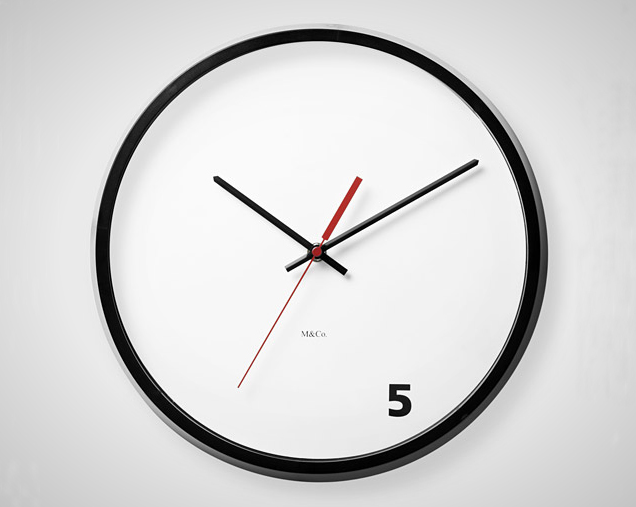
Why the 9 to 5 Office Worker Will Become a Thing of the Past

May 23rd, 2007 by John WesleyPrint This Post Print This Post

The Natural Productivity Cycle

In your personal life, when attending to business or working on side projects, how often do you spend 8 consecutive hours in front of a computer? It doesn’t make sense because we lose the ability to concentrate effectively within a few hours.

Everyone goes through alternating periods of high and low mental acuity. There are days when I work on personal projects for well over 8 hours, but the time is always divided into multiple sessions. I might spend a few hours coding a design, a few hours writing, and a few hours reading feeds, moderating comments, and responding to email.

I work this way because it aligns with my mental energy cycle. Any more than 3 hours in front of a computer and my eyes start hurting and I become restless. I lose the ability to do my best work. Instead of forcing myself to continue, I switch to an activity that allows my mind to recharge. These breaks maximize productivity by eliminating down periods. It’s counter productive to force work when the mental energy isn’t there.

The Problem with an 8 Hour Work Day

A continuous 8 hour work day is a relic of the past. It makes sense for physical labor and manufacturing work, but with information workers it doesn’t account for the mental energy cycle. The ability of a factory worker to think analytically is irrelevant, he’s either cranking widgets or he isn’t.

In the case of the modern information worker, nearly all tasks involve creative or strategic thinking. The way someone answers an email or interprets a piece of information can differ drastically depending on his or her energy level. Nobody does their best work 5:30 in the afternoon after they’ve been sucking down coffee all day to stay awake.

I can’t speak for all workers, but I’ve observed that productivity levels generally peak twice a day — first thing in the morning and shortly after lunch. The most productive period is the beginning of the day. People are capable of creative tasks like writing and solving complex technical problems. After a couple hours of intense work, energy levels drop and workers downgrade to less demanding tasks like responding to email and tinkering with existing creations. Towards the end of the cycle, the mind is so cluttered and drained that workers resort to “work related activities” that appear productive but don’t contribute to the bottom line. The afternoon cycle is similar but the productivity peak isn’t as high. For different people the peaks and valleys will vary, but overall I’d estimate only 3-4 hours a day could be classified as highly productive.

This number isn’t caused by slacking. You can’t force an information worker to be highly productive when the energy isn’t there. Workers can try their hardest, but the work just won’t have that creative edge. The low ratio of highly productive hours to total hours worked is the result of the continuous 8 hour work day.

When workers reach the low energy part of the cycle, they can’t recharge with a non-work activity. The only option is office purgatory. You can’t be highly productive because you’re mentally fatigued, but you can’t recharge because the 8 hour work day requires the appearance of constant productivity. The result is millions of unproductive workers trapped at their desks when they’d rather be doing something else.

Alternative Work Arrangements

The obvious solution to this problem is planning around the mental energy cycle by breaking the work day into multiple segments. The traditional office setting doesn’t accommodate this because there are few available recharge activities. People can’t do household chores, run errands, or engage in recreational activities without leaving the workplace.

Some companies have tried to make the work environment more accommodating by offering meals, fitness centers, and special areas for relaxation. Although these amenities are certainly an improvement, they’re expensive for employers and only partially satisfy employees.

The solution that makes the most sense is a remote work arrangement because it reduces employer costs and allows employees to adjust their work schedule to their mental energy cycle. When a worker becomes mentally fatigued, they can go off the clock and engage in recharge activities that are personally productive like exercise or relaxation. When energy returns, the worker can start working again at a high level, effectively cutting out the low productivity period of the cycle. Employers don’t pay for unproductive time and employees get to work in a more natural pattern that adjusts to their personal lives.

Why isn’t everyone doing this already? Many workers already are, and as commutes get worse and communications improve, the number will continue to increase. Of course there will always be a need for office workers in businesses (like doctor’s offices and law firms) that require daily customer interaction, but for most companies it really isn’t necessary.

There is also the argument that people need to collaborate in person. This is steadily becoming less essential. Most office communications are already done through email or instant messager. Face to face meetings are certainly necessary, but for the vast majority of lower and mid level employees meetings are the exception and could be conducted via phone/video conference or condensed into one or two days a week.

Another common objection is that employees will abuse remote work arrangements by slacking off. I’m inclined to believe that most adults value their employment enough that this isn’t a problem. In cases where supervision is required, web cams and other technology can used to monitor a worker.

I suspect the real reason remote work arrangements are still the exception is inertia. Companies are used to doing business in the office and are reluctant to change. There is also the presence of office politics. If one person is given a remote arrangement, jealous employees will complain. Doesn’t it make sense to give everyone what they want and save a boat load of cash on office space?

I may only be a kid in his 20’s, but I can tell when something just makes sense. I perceive an increasing number of people are noticing the same phenomena. Forty years from now we’ll be telling our grandchildren about the olden days when everyone’s mommy and daddy went to work in an office.

Related Articles:

1 Star2 Stars3 Stars4 Stars5 Stars (14 votes, average: 4.5 out of 5)
Loading ... Loading ...
If you enjoyed this article, subscribe via RSS feed or email updates because fresh content is posted daily.

142 Comments

  1. ab (Reply)

    “Employers don’t pay for unproductive time and employees get to work in a more natural pattern that adjusts to their personal lives.”

    Doesn’t work that way. If you get paid for your most productive time, you would get paid twice as much. If you would only get paid for 4 hours instead of 8, you would only receive half your salary.

    There is no substitution for meeting face to face. Remote work arrangements -never- work out as well as keeping your staff in the office. Even open landscape offices work out much better than offices with a separate office for each employee. Monitoring employees doesn’t work, unless you are keeping slaves in 24h-factories that is.

    My ideal company would be open lanscape. Every worker would be obliged to go there to work 4 hours between 11am and 3pm to work on their project and share knowledge. Sharing knowledge is what makes it all happen. There would be no salaries; workers would all share the total income and stay motivated to perform at 100% the 4 hours they do work. There would be no slackers, people would be going 100% because it would be worth it.

    An interview could go like this: “We have selected you because we think you are very good at what you do. Good enough to work here. We have a new project we think is worthwhile doing, and wonder if you are interested in joining a team to participate? We have many talented people working with this technology, and the infrastructure is already in place.”

    Currently, people drone away for 8 hours sitting in cubes performing at 10-20% efficiency because they don’t profit from their work they do. Efficient? No. Sufficient? Yes.

    If a worker is at least somewhat bright and interested in his field, he will start his own business. He will start his own business so he can pride himself at utilizing his 100% and also RECEIVE the true worth of his 100% productive time. Working your ass off for someone else basically gives you a silly crap bonus on the paycheck, not something you do for 30 years. Webcam at home or not.

  2. I’ve been working from home for years now, with dispersed teams spread across the globe. It does seem like people gravitate toward spreading their work through the day. I’ve attributed that to working with people in different time zones, and the flexibility of being able to attend to personal business during the day. But I think you’re right that sometimes people need to recognize when their creative field isn’t fertile, and they may need to let it be fallow for a few hours. That doesn’t mean that offices and workdays being abolished completely, but hopefully people will evaluate their teams’ schedules with an open mind.

  3. John,

    You’re not just a kid in your twenties, you’re a smart man. But I will say you have amazing insight for you age.

    I work in cubicle land managing knowledge workers, and everything you said is true. Even the top performers really only turn in aboout 6 hours of highly productive work, most everyone else is at 3-4. There are many reasons for it, but part of it is certianly the fact the we humans are not made to sit in front of computers for hours on end.

    I tell the people I manage that we don’t pay them for the hours they work… we pay them for the results they achieve, so I am very flexible with their hours.

  4. ab,

    I really like your vision of the ideal company. My own is very similar, especially the part about total income being shared.

    Dave,

    It’s great to hear the opinion of someone who works from home. I agree the “office worker” will never be abolished completely, but that doesn’t make as interesting a title. :)

    Steve,

    Thanks a lot. It means a great deal coming from someone who work in management. I’m glad to know I’m making sense to someone, although I’m sure many will disagree.

  5. Nice article. As a self employed IT consultant I spend a lot of time in offices, and a lot of time in front of a computer at home. My work day is spread out among the 24 hours depending upon when the problems occur and when I can access systems around other workers. (I am forced to do a lot of work at night, remotely, when everyone is off the network.)

    For the clients I work with, remote or telecommuting is a big issue . The big problem with remote workers in a large corporate environment is the bias against the workers when it comes to responsibility and promotion.

    Remote workers don’t get the water cooler time. They don’t get the chance to be seen “sweating” and they don’t give off the same vibe of “100% commitment” that the cube dwellers give out. Often they will not be given career making projects or assignments because of that perception.

    Also a remote worker gets less of a chance to be seen as a manager by more than just their team. You don’t get as many chances to look “managerial” in front of others.

    The water cooler, the break room, gym, the impromptu cake in the conference room for someone’s birthday . . . those are where promotions are made.

    Finally, it has been shown that remote workers are often the first to go when there needs to be cuts and layoffs. It is easier to axe the person on the other end of the phone or email as opposed to the guy that you see a dozen times a day.

    If you are career minded, remote working may be counter productive. A recommendation for any remote worker would be to be in the office at least a day or two a week to see and be seen.

  6. I normally work 4 days a week in the office and one day at home, it never ceases to amaze me how much more work I get done at home despite the fact I work less hours. My daily routine at home is to wake up around 8:00am which is the time I would normally be getting into work (2 hours after I would be getting up if I were heading into the office.) Before showering, breakfast and what not I sit down at my computer, answer my emails and begin programming. I will program until my stomach tells me it’s time to eat or I start getting distracted easily (usually occurs around 10:30-11am.) At that point I will go have a shower, have some brunch, come back down around 11:30-12 and start the process again which will last until about 1:30-2pm. Then for the rest of the day I’ll answer emails and calls but I don’t get any real work done unless I’m unusually motivated.

    Yes despite working only about 4-5 hours a day I accomplish more that day than I do most of the week I’m in the office. I thrive in solitary environments when it comes to working, but I realise the advantages of coming to the office, I see it as a more business social than a place to get work done. I go to meetings, I interact with my co-workers and superiors, I make my presence felt in the company. Then I spend 1 of my 5 days, at home, doing the actual work that needs being done.

  7. Chris Quick (Reply)

    I enjoyed your post. I think you’re hitting on a trend in our culture that is beginning to catch on as technology and the changing structure of the modern workplace allow employers to better accommodate workers’ personal and family needs. I personally will be starting an “alternative work arrangement” next fall following the birth of my first child. It’s a change that both my boss and I are looking forward to. I will be able to juggle work and family responsibilities more effectively and my boss won’t have to pay me to sit at my desk and “look busy” when my productivity starts to wane in the afternoon. I highly recommend Dan Pink’s book “Free Agent Nation,” a readable and intelligent analysis of this same topic.

  8. shenpen (Reply)

    I disagree. The problem with working from home or the general concept of getting paid for results instead of time is how to quanity results? In an office environment, if you get too many tasks assigned, which forces you to work overtime, you are entitled overtime pay or extra holidays. With a contract where the pay is not based on time, what keeps your boss from throwing every day 12 hours worth of tasks on you? Thus in the end you will need to quantify workload by some other means, such as lines of code written or something like that which is stupid. Although quantification via time is stupid too, it seems less stupid than other measurements. And if you quantify workload by time, you have to be in the office otherwise how do you prove you are overburdened and entitled to overtime pay or holidays?

  9. shenpen (Reply)

    s/quanity/quantify/, sorry

  10. I loved your post! As you can see by the various replies you got, some people are still stuck in the “must be in an office mode.” I am in sales, and trust me - a good day for me is about 3-4 hours. But, because I produce results, my boss couldn’t care less.
    When people get out of the “control mode”, workers actually get more done with less complaining about how much time they have to work. Watching people work really doesn’t make them work harder - it makes them think og ways to get out of work more creatively.
    I look forward to the day when this is the norm rather than the few forward thinkers in the world…

  11. I loved this post as well.

    I work from home, or wherever I am. My husband and I reguarly travel to our rental house for maintainence and filling the rental rooms…and we work on our properties.

    What gets me is that my daughter - who is in school - is bound to the five day week, and we often pull her out of school because our jobs need to be done elsewhere. I’ve had this same thought about the 9-5 job, that I have about the structure of schools. As we find we don’t need that daily structure, we will be finding that kids don’t either, and hopefully schools will be set up differently. Some already are. I believe the two are connected: Parents need schools primarily as “day care” now, and kids are beginning to need schools to be flexible.

    Great post!

  12. Ricardo Semler is the man.

  13. wow - this is great I created a similar article which is on goarticles.com, but this is so true, so many people are just getting tired and are looking for other alternatives

  14. Good post! My experience is aligned with this. I work from home 2 days a week and am always highly productive on those days, even though I probably put in fewer hours. I attribute my productivity to two causes: fewer interruptions and being free to follow my natural mental cycles. On average, I work around 6 hours on my telecommute days and 9-10 hours on days I go into the office. In the office, I put in face time, go to meetings and spend time with the people I supervise.

    If everyone only came into the office for meetings, we would be forced to condense meetings into smaller timeframes and they would become more productive as well. Right now, as far as I can tell, meetings are merely excuses for filling up the 8-hour day.

  15. “Meetings are merely excuses for filling up the 8-hour day.”

    I couldn’t have said it any better myself. I wonder if it would be possible to move to a more productivity based employment model, rather than the hourly system.

  16. Shenpen (Reply)

    My questions still stands, nobody even attempted to answer it: if you work from home, how do you PROVE that you already have enough tasks for 40 hrs for that week and therefore you shouldn’t been given more or if you are given more then get overtime pay or something like that?

  17. Shenpen (Reply)

    (Maybe it depends on which profession your work in. My experience as an ERP developer is that there are always more customization requests on the waiting list and it’s essential to make people know if you are already busy enough or you will be buried under more tasks. And the only way to do it is to be there. In fact I found often people don’t even respect if you are busy in the office, because everybody believe their request is more important and urgent than others so usually I have to go to customer sites and turn off the phone to be able to actually finish anything. It isn’t very pleasant as it adds something like 3 hours of driving to 7-8 hour workday but otherwise nothing would ever get done. Is your experience so different from mine?)

  18. Shenpen,

    I don’t think there is really anyway to prove you have enough tasks to fill 40 hours because people work at much different speeds. Thats the problem with time based wage system, it rewards the best and worst workers equally. Instead, you could make the job require a certain amount tasks be completed, with anything more receiving extra pay.

    In the situation you described, where workers need to constantly be given new tasks, a remote working arrangement might not be effective.

  19. John,

    You are spot on when you say that 4 hours would give high productivity.

    Research confirms it.

    And it inspired me to write an article similar to yours.

    http://tinyurl.com/gk4o7

  20. bob smith (Reply)

    Try having kids, then you can see why the 8 hour day is necessary. There have always been jobs that don’t require the 9 to 5 (farming and prostitution… the two oldest jobs). Slow and steady gets the job done.

  21. […] May 24th, 2007 [link][more] […]

  22. GREAT post. I can’t say how many times I’ve underestimated a project because I was assuming 6-8 hours of productive time in a day… It’s just not realistic.

    We’re actually working on a web app that will do a darn good job of measuring productivity across your day… For both individuals and teams. Would love to get your thoughts on it (http://www.rescuetime.com).

  23. Great post. The problem, however, is a political one. We’re moving the direction of more work each day — not less.

    What we need is an employee bill of rights. Like this one:

    http://darkpartyreview.blogspot.com/2006/10/essay-employee-bill-of-rights.html

    You have a cool blog here. Keep up the good work.

  24. PaulJ (Reply)

    I don’t think the 9-5 deal is going to change, until most of the Baby Boomers have retired or died off, they’ve been forced into the 9-5 deal for the last 30-40 years, they can’t seem to let go of it. Most upper management types think that every employee needs to be in his or her desk by 9am every day, because that’s how they were taught. You also have to remember that most of these people have kids, mostly grown up kids now, but still kids. A 9-5 day is ideal for people with kids, they get the kids ready for school in the morning and get home in time to make dinner.

    Personally, on my normal day, I don’t do any productive work until about Noon. Thankfully my current boss is not an old drone, he just turned 40, which for some may seem old, but for a guy in his position, he’s pretty young. Further, he doesn’t really care how I get my job done, just as long as it gets done. This is a very rare situation!

    Prior to starting this job, I interviewed with a start-up run by some “progressive” baby boomers .. well .. they thought they were progressive, anyway. I responded to the job from Craigslist, the ad boasted “Over 50% Telecommute”, after the second interview, they were telling me that, “YOU WILL BE REQUIRED TO BE IN THE OFFICE AT 8AM EVERY DAY.” Well, I guess they just needed to find some other sucker. After that I interviewed at a non-profit company, in DC, they REQUIRED their employees to show up between 8:30am and 9:00am every day, again, a company run by Baby Boomers; that was one of the main reasons I didn’t take the job .. that and they didn’t pay for sh*t.

    At my current job, sometimes I come in at 6am, sometimes I come in at 11am. Some days I work 6 hours, on others I’ve worked 11 or 12. I’d recommend to you, talk about hours when you interview; if they seem very stern on you coming in at 9am, you probably don’t want to work for them, as they will probably be very inflexible about many things. Try to find bosses who are younger guys between 30-40; you don’t want to work for anyone who is too young, as they will have no experience. I worked at another company which hired all of these 20-something-fresh-out-of-college guys, who really thought they were good managers; needless to say, that job didn’t last too long.

    If you want to work flex hours or telecommute, be sure to bring that up in an interview. Do your research, find out if your state offers any telecommuting programs to benefit companies, bring the figures with you to the interview. Another good thing to bring up is comp time, which is if you work a 12 hour day, you get to take that 4 hours off at another point and not have it count against your vacation.

    Good Luck!
    Paul

  25. Try teaching Grade 8 students after only a 40 min. lunch and you will see the value of a shorter, more focussed work day… unfortunately teachers also serve as babysitters so there is not much else for a student to do when they get to go home at noon. Still, there are some schools that allow considerably more freedom in a day that manage to get (many) students through the ‘necessary’ curriculum.

    Your idea that, ‘In cases where supervision is required, web cams and other technology can be used to monitor a worker.’ is fraught with 1984 Big Brother overtones…

    I would worry about quota style expectations for ‘remote’ workers, as this method works well for a limited few people of the world, whereas for many they simply seek to meet the minimum requirement. Conversely, some people can do in 4 hours what others need 8 to do.

    Does the modern-day-analytical-thinking information worker, need to ‘punch in’ 8 hours to be deemed valuable and worthy of their salary?

  26. Someone who gets telecommuting…

    John at pickthebrain blog has some excellent perspective into the often misunderstood subject of telecommuting. As you probably have already figured out, micromanagers absolutely HATE telecommuting! Management by objective is a key ingredient for a s…

  27. Why the 9 to 5 Office Worker Will Become a Thing of the Past…

    This story has been submitted to Stirrdup. If it can generate enough interest, it will make it to the main page….

  28. HardwareGuy (Reply)

    Ohhhhh…so that’s why I read bloglines for 5 hours a day and only code for 3.

  29. Yea.. I said the exact same stuff back in the 80’s. (Worked at a progressive silicon valley company then). No go. Work at home and not in office is a great dream but companies just won’t do it. Not even sure that’s the issue. Collaboration and agile/extreme programming require close physical proximity. I think it’s going the other way: MORE time at work, not less. At least, if you write code for a living.

  30. enjoyed the article.
    so true … but need more alternate methods to really get employers going …
    employers have a thing for SEEING employees work …
    hehe …

  31. Nice post, John.

    I work for a multibillion software biggie. I am comfortable with my environment but I am not utilising my abilities to the fullest, I know. My friend who works in the same company keeps on complaining about his congested glass cubicles. He stays with me and I find that he is always reluctant to go to work every morning. We both are into some other part-time business too, which we do after our office hours. it needs more exertion from our side but we feel glad to do that. going to our business office is fun, we enjoy what we do there.

    Like you said, sitting in our cubicle staring at the screen continuously for 8-11 hours is very tiring. Everyone will feel really exhausted. I know certain IT firms in India which allow its employees to work from home. Its relaxing and energizing. You dont need to monitor them using webcams and all. Company will be allowing the guys to sit at home and work only if they find them to be challenged and committed . Also, if they are delivering the stuff within time, who cares what they do at home?

    And face-to-face meetings are unavoidable. Still many manage with VC[video conferencing] etc.

  32. Here’s an interesting article on Best Buy’s corporate work environment.
    It supports a lot of what you’re saying here.
    http://www.businessweek.com/magazine/content/06_50/b4013001.htm

  33. ab (Reply)

    Elijahblue:
    Same here, tried it but its only suitable for special tasks. Been working as a consultant designing and programming in different offices for ten years now.

    Putting people very close together has been the most efficient way to get projects finished on time, ie open landscape office (no cubicles or separate offices). Close communication is the key for everything, and it also overcomes procrastination and digg.

  34. […] Why the 9 to 5 Office Worker Will Become a Thing of the Past– totally. 9-5 is so old school. Sorry, it is. I’ve been thinking about how the 8 hr work day is dying for a while now… it just makes sense to work when your most creative. And it’s cheaper and totally viable to work at home now too since the internet has gotten so pimp! I would add that the employeer likes to be the “controller” and they can control more when they can see you more… […]

  35. sarah (Reply)

    Thanks for this article. I’m in a 9-5 job for the first time and I’ve been beating myself up about not getting enough done. I’ve aways been very productive on projects when I was in charge of my own working hours, so this a new experience for me and not one I’m eager to repeat in the future.
    It’s good to know that I’m not alone in this.

  36. Andrew (Reply)

    A well articulated article. I think you’ll find that the people who’ve agreed with this are the people who have worked from home and found the amazing benefits it brings and those who disagree are having trouble opening their mind to the fact that the common way is not necessarily the best way.

    I’ve been working from home most days for the past 3 years. I find that I dread going to the office because it’s so much harder to get work done there, it’s only really good for catching up on the social side of things.

    Students have always complained about getting up early and, at long last, a scientific study has proven that their bodies aren’t suited to it. It won’t be long before a study proves that sitting at a desk for 8 hours, doing the same thing, is not the best way to keep you happy or get your best performance.

  37. Nice posting (although painfully obvious for anyone who’s ever worked in an office). I agree with you 100% as I too am a 20 something year old, however there is one flaw to your logic:

    To get in a full 8 hours of work every day, while only getting paid for “productive” hours would mean 12+ hour workdays. This means that personal/office time is serverely intertwined.

    While this isn’t a problem when you’re young, I can see it being a problem when you have a wife & kids who don’t live the same lifestyle you do. Kids go to school from 9-3 and the wife will start bitching that you don’t have time for her at night.

    This I think is one of the reasons that we’re still following this ridiculous 9-5 schedule. It’s unhandy if you want to be productive, however if you want to spend time with your family it’s more efficient to be mediocre.

    It sucks, but I don’t see a solution to this. I for one love working at home and living by my own schedule. Work hard, play hard. Unfortunately not everyone sees it this way.

  38. John, I started thinking about the title and realized: The 9 to 5 worker is already a thing of the past. It’s form is still in place, but the reality is quite different.

    Huge numbers of workers of all types are connected through communication devices ’round the clock. The difficulty with this lies in your premise that we’re only productive a few hours at a time (and yes, I agree). So what happens is: People do their mandatory 8 hours and then continue to work off-and-on throughout the evening and very early morning. And as Alrayyes points out, it impacts life at home.

    What strikes me is this: I think most everyone knows that circadian rhythms and productivity cycles are true. Yet rather than manage to results, it seems easier to continue that which we know is not productive (9-5) vs. changing to a different model where possible.

    I’m wondering what it will take–and how long–to legitimize new ways of working. At this point I sure don’t have a solution for large companies who need standardization for issues of control and tracking.

    I wonder what it will take to ultimately make this happen.

    Good post, John

  39. I disagree at the point of having a camera watching me at work, even if I’m at my home office. That isn’t really a good solution.

    I use to think that most people haven’t the discipline to organize theirselves to work at home efficiently, and companies will really loose performance in the next years, until we get prepared to handle this kind of work.

    Technology companies such as Microsoft, Apple and IBM could develop creative ambient, giving workers freedom to choose and responsability to respect.

    In the last 200 or 300 years, we were educated to believe that personal life should adjust to work. Now you tell that work should adjust to personal life. Not one neither another, balance both is a responsible response. But responsability ins’t a true value to the youth (look, I’m 27 y.o.). Parents must change the education their children get at home, so their children will change their work ambient next.

    Sorry for my awful english, bot I’m really interested in that important discussion.

  40. I couldn’t agree more. I quite often work from home and to be honest I feel like I work more efficiently. My team does all of our communication in Campfire, via emails, occasionally Skype, and on an individual basis IM. Sometimes its overkill but we’ve got developers on our team in Taiwan, and Canada so it doesn’t matter if we’re in the office or not our commutation is documented and doesn’t always have to be real-time. When I’m home I can work through the morning, take the dog for a walk come back do more work take a break.. then work into the evening. I usually prefer working in the late hours anyway. It also cuts my hour commute (one way) so I can get started working earlier or spend that extra hour working. Anyway you get my point. (Also I like not having to change out of my pajamas all day on occasion.)

  41. Medical Secretary (Reply)

    Not very realistic outside of your field. Don’t get me wrong, I’d love to be able to tell a patient: “The office is closed until after lunch because the staff anticipates a mental peak around noon, so your chronic pain will just have to wait.”
    Some things matter more than workers’ feelings. Sad but true: the workplace just ain’t for pussies.

  42. Steven (Reply)

    I just finished up reading a book explaining this concept: “The 4-hour Workweek” by Timothy Ferris. Your information appears to be motivated by the exact same lines as his text, and I suspect that you may have gleaned information off the book as well. But if you haven’t, it’s a magnificent read.

  43. […] A Changed Work World for the Stay-at-Home Mom Published May 24th, 2007 Motherhood , Discussion , Links , Children , Internet , Family , Uncategorized I read a really interesting article on a blog called Pick the Brain. […]

  44. Shenpen (Reply)

    John,

    “Instead, you could make the job require a certain amount tasks be completed”

    The problem is, it’s inherently impossible to correctly estimate the time a given task requires if we are talking about knowledge work, because the work itself consists of finding solutions to problems we don’t fully understand before we solved them. Fred Brooks proved it for programming but it also applies to any kind of programming work. Quantification of knowledge work never really works - f.e. if you have a call center and tell people they have to take a fixed number of calls, they will try to find a way to end those calls earlier. If you tell them to solve a given number of calls, they will tend to give faux “works as designed, even if the design is broken” “solutions”. The only way to get that call center to work correctly to pay them by time, thus to remove the pressure and basically let them take as much time as they need to actually solve the calls. But if people are paid by time they need to be able to prove how much time they worked.

    People who are more effective and thus use their times more efficiently are usually simply be able to negotiate higher per-time salaries.

  45. Shenpen (Reply)

    Sorry, it’s too late here and I’m sleepy - instead of “it also applies to any kind of programming work” I mean “it also applies to any kind of KNOWLEDGE work”

  46. I think Shenpen’s concern deserves a lot of attention - we’d all love the flexibility to work according to our own schedules, but we also NEED time off. When the work day ends at 5 (or 6 or 7, as that seems to be creeping farther back), at least you know the rest of the day is yours. But if you work just on assignments? What limits can be imposed on how much work you’re assigned? When do you get to stop being an “employee” and start being your own person? And if people are judged by productivity and can work as much as they want from home, the people who do the best are going to be the people who work more and more and more. The modern employment structure is bad enough for families and personal development and growth now. Do we need to make it worse? Flexibility is great, but on the worker’s terms, not just the employer’s.

  47. […] Why the 9 to 5 Office Worker Will Become a Thing of the Past (tags: Unfiled) […]

  48. […] Why the 9 to 5 Office Worker Will Become a Thing of the Past (tags: productivity Career psychology interesting) […]

  49. I agree. But there are other workers with only one kind of task for the rest of the day. I think the only solution to that kind of boring work is to have short breaks to refresh the mind.

  50. […] Personally, I find myself most productive from mid-afternoon and often into the early hours of the morning. 8am-2pm is pretty much a low time for me. read more | digg story […]

  51. I agree with a lot of what was written here. I suffered an illness a few years ago and find it difficult to concentrate for a full day now - so little breaks are a fantastic way of recharging.

    I now work from home and break the day up with household chores etc. It means I spend a longer time “working”, but as I have done the evening stuff during the day, it really doesn’t matter - and I am considerably more productive.

  52. […] May 25th, 2007 by chaitra ..would become a thing of the past! […]

  53. I think we think alike. I completely agree and that is why I freelance. I cannot stand 8 hours in an office with over-caffeinated zombies all around me. I’m just wouldn’t be creative and my mind wouldn’t be in the best state.

    I agree every individual has their unique “mental energy cycle”. Some people like me perform the best in the silence and peace of the night and some people are optimal in daylight. Even so it fluctuates. Somehow sometimes I would like the day more. Very often after an intensive project, I would need at least a full day or 2 to recharge, even if it’s a weekday. I cannot do that if I had a 9-5 office job.

    Great article! I really enjoyed it.

  54. […] Why the 9 to 5 Office Worker Will Become a Thing of the Past‘Gedwongen’ werken van 9 tot 5 is een achterhaald principe. […]

  55. […] http://www.pickthebrain.com/blog/why-the-9-to-5-office-worker-will-become-a-thing-of-the-past/ In your personal life, when attending to business or working on side projects, how often do you spend 8 consecutive hours in front of a computer? It doesn’t make sense because we lose the ability to concentrate effectively within a few hours. I work this way because it aligns with my mental energy cycle. Any more than 3 hours in front of a computer and my eyes start hurting and I become restless. I lose the ability to do my best work. Instead of forcing myself to continue, I switch to an activity that allows my mind to recharge. These breaks maximize productivity by eliminating down periods. It’s counter productive to force work when the mental energy isn’t there. Employers don’t pay for unproductive time and employees get to work in a more natural pattern that adjusts to their personal lives. […]

  56. […] read more | digg story […]

  57. […] Why the 9 to 5 Office Worker Will Become a Thing of the Past Filed under: Uncategorized — recar @ 10:44 am Why the 9 to 5 Office Worker Will Become a Thing of the Past The Natural Productivity Cycle In your personal life, when attending to business or working on side projects, how often do you spend 8 consecutive hours in front of a computer? It doesn ’t make sense because we lose the ability to concentrate effectively within a few hours. Everyone goes through alternating periods of high and low mental acuity. T[news] [general sciences] [business] [science] […]

  58. […] Why the 9 to 5 Office Worker Will Become a Thing of the Past - great read, couldn’t agree more, now forward that to your boss if you want to see him laughing hysterically […]

  59. Al (Reply)

    This is a great ideal. However, business is unlikely to change to reflect human need and output. The problem is that, for many businesses, they work the hours they work because the businesses they deal with keep the same hours. I can’t see the UK publishing house I work for, for example, changing anything anytime soon! But it’s an insightful read nonetheless, and the only criticism i have is that I don’t think productivity really rises just after lunch. It’s a time when our bodies are pouring chemical energy into the digestion process, and we tend to be sleepier, perking up around 4pm when energy levels rise again. Bring on the siesta, I say :)

  60. […] Via Digg or Delicious or somewhere, I discovered John Wesley’s speculation on not necessarily working eight hours a day: After a couple hours of intense work, energy levels drop and workers downgrade to less demanding tasks like responding to email and tinkering with existing creations. Towards the end of the cycle, the mind is so cluttered and drained that workers resort to “work related activities” that appear productive but don’t contribute to the bottom line. The afternoon cycle is similar but the productivity peak isn’t as high. For different people the peaks and valleys will vary, but overall I’d estimate only 3-4 hours a day could be classified as highly productive. […]

  61. http://www.oastler.ca/my-002/development/20070525_do-you-know-your-energy-cycle/

    I’m slowly orchestrating vocational change to bring about the ‘ideal situation’ I want. Something that has between 5 - 20 people working on shared contracts, a cheap but comfortable common office space where our development servers would live, we could entertain clients for face time, and have a keg and BBQ in the back for the social elements of work that are a must to making us feel more than just meat for the grinder. Everyone would have a vested interest in the long-term success of the company - as it would really just be an umbrella name under which multiple private contractors are offering their shared services. The ideal location for this would be a farm property with woods in the back. Forget ‘boadroom’ meetings, how about we meet out by the stream on the rocks and brainstorm ideas for that next advertising campaign we’re pitching?

  62. Dan (Reply)

    ab said: “Remote work arrangements -never- work out as well as keeping your staff in the office.”

    Please tell that to my wife who has worked from her home office for over three years. She a senior-level IT recruiter for Cisco Systems.

  63. prohappy (Reply)

    Yeah! I am so for it. It is senseless sitting at a desk for 8 hours where you could be productive for 4 hours at the desk and change the environment to be productive at something else (maybe a part time business).

    You have my vote for 9 to 5 office worker is rapidly going to be something of the past. Thanks to communication technology.

  64. Excellent article. I agree completely with you, 4 hours should be the way to go. That’s why you see so many people falling a sleep at work, they just can”t wok efficiently after 5 or 6 hours at work.

  65. ab (Reply)

    Dan,

    Knowledge sharing doesn’t happen if employees are working from home, thats why. I’m happy your wife has found a way to work from home that is fine with her, but she wouldn’t be on my projects.

  66. Matt (Reply)

    I disagree with the post, but it’s only because of the way our programming team works. It’s a small team, and we’re all responsible for larger things like DBA and architecture. Collaboration is key, and some of our best ideas come from two people standing in front of a white board with someone else overhearing and chiming in.

    Our office has a work from home policy for those months that you’re pulling support, but having done those, I’ve never felt more disconnected from my team.

    In order for the work-at-home-on-your-own-cycle process to work, there needs to be a lot of discipline and some separation. Try explaining to your 2 and a half year old who is potty training why they shouldn’t pee on your office floor while getting your assignment done.

    Try explaining to your wife why you’re not listening to her because you have to answer this email on your blackberry. Then explain to her that no, you really do prioritize her over your work.

    You have to ask yourself one thing when you work from home: Do you have an office in your house, or do you have a bed at your office? If you have a bed at your office, do not work from home. You will never stop working.

  67. ab said: “Knowledge sharing doesn’t happen if employees are working from home”

    Actually thats not necessarily true. I work for a software development company. Like I said before we have developers all over the world and we use something called campfire to do our mash ups as well as most of our communication its all documented so it essientially records our minutes for us so we can go back and search through archives should we need to.

    I do agree that there are some types of businesses that this would never work for such as Doctors offices’, retail stores etc, the author of this post did mention that as well.

    P.S. I didn’t mention it before but great post!

    cheers,
    Tawnya

  68. […] As the U.S. economy changes from a manufacturing-oriented one to a service-based one the work hours are changing too. When workers aren’t attached to an assembly line technology allows them more work flexibility. James Joyner and John Wesley see it as letting them work when their most productive. Wesley writes, The solution that makes the most sense is a remote work arrangement because it reduces employer costs and allows employees to adjust their work schedule to their mental energy cycle. When a worker becomes mentally fatigued, they can go off the clock and engage in recharge activities that are personally productive like exercise or relaxation. When energy returns, the worker can start working again at a high level, effectively cutting out the low productivity period of the cycle. Employers don’t pay for unproductive time and employees get to work in a more natural pattern that adjusts to their personal lives. […]

  69. […] Sage words on productivity, as Pick the Brain predicts the end of the 9 to 5 Office Worker. Driving to goals and team objectives, with routine checkpoints (to drive out procrastination), not “office hours” has always been an effective formula for me. […]

  70. […] Sage words on productivity, as Pick the Brain predicts the end of the 9 to 5 Office Worker. Driving to goals and team objectives, with routine checkpoints (to drive out procrastination), not “office hours” has always been an effective formula for me. […]

  71. zach (Reply)

    Chinese officer workers don’t mind being slaves. Actually they enjoy it.
    But, the smart ones, working at a multi-national corp., that become office managers have the opportunity to embezzle millions of dollars and escape to Canada.
    More power to them.

  72. I see it as, the more hours you work the more cash in your hand. The people themselves choose if they become the 9-5 worker.w

  73. jerome (Reply)

    Even production or “factory workers” as you describe them go through peaks and valleys of high productivity.Most successful manufacturing environments moved to the 4day split shift work week years ago,some even use a 3day multi shift format.Don’t belittle the manufacturing sector,without them you wouldn’t have a keyboard and mouse to goof off with at work.Not to mention the moving vans all the mommies are careening around in.Have fun.

  74. Jerome,

    I never intended to belittle the manufacturing sector or other non-white collar works. I was only trying to make the point that information work is different, though I’m sure you’re right about other types of workers having productivity cycles too.

  75. […] Link here. Via adrift. Tags:Nothing In Between Techy Tech […]

  76. jerome (Reply)

    John,
    Not to worry,I was speaking in a collective sense.What I find interesting are the psychological benefits of not being involved in a traditional 9-5 work scene.People,that I have observed, have become more productive and seem to possess a higher sense of self esteem when they have more free time to pursue personal activities.The workplace and the individual benefits from this. Maybe our society as a whole could become a little saner if the masses didn’t consider themselves “wage slaves”. Just my input,I liked your article very much.

  77. […] Forcing people to work for a specific period of time doesn’t improve productivity - quite the opposite. Self-employment allows you to work during those times when you know you’ll be most productive, according to your natural productivity cycle. […]

  78. […] [source] May 23rd, 2007 by John Wesley The Natural Productivity Cycle […]

  79. Scott (Reply)

    There isn’t any one, best workstyle for all people because it’s not an either-or issue. And there is no way to quantify knowledge work regardless of whether the knowledge worker is at home or at work. Some will disagree and state that knowledge work can be measured, but it is clear from Deming’s red bead exercise that individual performance is at the mercy of the system within which the individuals work, and not something directly within the individual’s ability to control. How do you quantify Gerstner’s turnaround of IBM? You can talk about it, you can state many of the things he said and did, but which of those things made the difference? And exactly how much difference did each make? No, there is no way to quantify these things, though we often assume that we can, we create “metrics” and then we think we know something when we’re really deluding ourselves. Processes can be quantified and measured, but people’s individual performance cannot. If you want something more recent than Deming, I refer you to Robert Austin’s “Measuring and Managing Performance in Organizations.”

    Many people, perhaps most, need to be at specific places at specific times. Doctors, nurses, police, many service workers who deal directly with customers; the job requires that they be there. But there are many who do not need to be at any specific place at specific times, and I think it would be best for other work arrangements to be made in those cases.

    The Federal Government is making the telecommuting option mandatory for many agencies including mine. Mandatory means that it must be offered to anyone who is in a job that does not require them to be at work to do their jobs all the time. For some it might mean working at home or elsewhere 3 out of 5 days. The US Patent Office is moving most of their patent researchers out of the office and into their homes, providing them with secure connectivity and equipment. There has been a lot of resistance to these moves, mostly from management who were afraid that they would not be able to monitor employee’s work. Most managers in my building stay in their offices and go to meetings or spend their time with other managers, so they aren’t really monitoring employees who are at work anyway. The resistance is disappearing both due to legislation and also to the results — the majority of managers who manage employees who have switched to some kind of telework situation have rated the switch a success and have seen an increase in productivity.

    Personally I have done my best, most focused work when I have gone in around 10am and left before 2pm. It’s not something I expected, and I don’t know why it should be this way, but it is. So I’m on board with the idea that people can only really do focused mental work for about 4 hours at a time, and often less.

    As for face-to-face meetings and knowledge sharing, I don’t think it matters either way. Face-to-face is important for creating a bond with others and having a sense of comraderie, but it’s not necessary for everyone.

  80. the thing is, most of the work that is done today produces TOTALLY UNNECESSARY GOODS. In the process, the rich get richer, the poor poorer, the environment gets f-ed up, and people work tons of hours instead of spending time with friends, family, and in the community.
    If everyone worked 1 or 2 hours a day, we could feed, clothe, house, and provide basic neccesities to the entire population of the world. Imagine having to work only 1 hour, and doing whatever you want in the rest of the time! The world would be so much better! The only reason that working hours have stayed the same (they have actually risen) as productivity has increased is to make the rich richer.

    Farmers in the middle ages worked an average of 3 hours per day in the fields.
    Hunter/gather societies worked an average of 2 hours per day
    we work an average of 8-9 hours per day in the US, much higher in Japan and China.

    Why has productivity gone up so much and yet we still work all the time? Wasn’t the promise of technology to liberate us and give us free time?

    I say f*ck this system of wage labor. It needs some serious revision.

  81. […] more | digg story No Comments so far Leave a comment RSS feed for comments on this post. TrackBack URI Leave a comment Line and paragraph breaks automatic, e-mail address never displayed, HTMLallowed: <a href="" title=""> <abbr title=""> <acronym title=""> <b> <blockquote cite=""> <code> <em> <i> <strike> <strong> […]

  82. […] esoterica: how to invest buffett’s way crazy wave surfing i like mahatma some weird-ass cursor hip-hop violin semen is a happy pill for women!? take a look at the picture. honey, you need TAKS if anything. why the 9-5 worker is a thing of the past a.. what? bicycle lift? the best glitch in gaming history: donkey kong country =] european man found in ancient chinese tomb hahah aww cute pictures sexual orientation affects map reading skills the truth on the boy with the spiders in the ears aww poor monks, they should get money for their temple […]

  83. […] For the rest: excellent reading: Why the 9 to 5 Office Worker Will Become a Thing of the Past […]

  84. […] 7) Pick the Brain - John Wesley does a great job of pointing out why our present system of alleged productivity needs to go the way of the dinosaur in his post Why the 9 to 5 Office Worker Will Become a Thing of the Past. Can you apply these concepts to your life or career? […]

  85. phillipsguy (Reply)

    When I read the responses about balancing other life activities, I thought efficiency from the employee’s point of view is to maximize return on their time. Therefore, if you can work less and collect more benefits, then you are winning the game!

    As to face-to-face compared to telecommuting, people interrupt each other all the time. Any work requiring deep concentration is better done in the least distracting environment. My own pattern is to start on a project and obsess on it for hours or days. Then I feel drained and I coast for a while until something else seems important to me.

  86. May 27, 2007 Edition…

    John Wesley presents Why the 9 to 5 Office Worker Will Become a Thing of the Past posted at Pick the Brain.

  87. […] Shownotes: Apple’s lesson for Sony Good day for Feedburner Firefox for Mac Steve Jobs and Al Gore Controlling Multiple Macs 100% Hybrid Cabs in New York City 10 ways to save yourself Top 4 Ways You’re Actually Wasting Gas Instead of Saving Gas World’s Thinnest Laptop Bill and Steve Face Off The Nine to Five Workday The Facebook Platform Facebook Video The 337 Project (Here) Soft Drinks Google’s Final Days […]

  88. I agree. It’s a good idea to vary the things we do to avoid getting bored. We know that continuous work for 8 hrs. is not all work but consist of other things.

  89. […] John Wesley presents Why the 9 to 5 Office Worker Will Become a Thing of the Past posted at Pick the Brain. […]

  90. […] Read more… […]

  91. I agree. We certainly don’t have to force ourselves to do the same task if we have other tasks that awaits us. But in case we don’t have any other task, I think a short break is necessary.

  92. […] The Natural Productivity Cycle In your personal life, when attending to business or working on side projects, how often do you spend 8 consecutive hours in front of a computer? It doesn ’t make sense because we lose the ability to concentrate effectively within a few hours. Everyone goes through alternating periods of high and low mental acuity. Tread more | digg story […]

  93. Shenpen (Reply)

    OK let’s try to find a broader viewpoint that contains both sides of the discussion. I agree to that the ideal way of working is to become self-employed or freelancer. In these cases whenever somebody gives a task to you, you usually give a quote on how much hours it will take and charge for the time. In this case there is no danger of extra work without extra pay. In this case nobody cares how much you actually work, because you charge your quoted time, usually, even if the actual time is somewhat different.

    However in an employment contract with a fixed pay it just cannot work, you have to be able to prove how busy your are, or else you will be buried under work.

    So the real deal is that I agree that the 9-5 type of work was actually developed for the clerks, factory workers, or bean counters of the old times where being there practialy equals doing the job and therefore does not really fit a knowledge-based economy. But the point is, the concept of employment itself is what does not fit a knowledge-based economy. In the long run, knowledge workers should be self-employed. But as long as you are employed for a fixed pay, working for home will automatically mean working too much for no extra pay.

  94. edoj (Reply)

    I go to the office for the free coffee !
    A few thoughts:
    I think it all boils down to trust or the lack thereof. If the boss doesn’t trust EVERYONE, is it fair to let just me work from home? When you can’t trust everyone, rules must be made and enforced. Otherwise, we’d all be driving 100 MPH down the highway.

    Sure, a webcam sounds big brother-ish, but is it any different than them peeking into my office whenever they walk by? Either way, they’ve seen where I’m at with their own eyes. I think webcams or videoconferencing would help employers warm up to the idea of employees working from home because they can see what the worker is doing and how they are feeling. However, some homeworkers might want to know when they are being watched… but would a trustworthy employee have anything to hide anyways (aside from working in their underwear)? At the office, I don’t decide who or how often I’m checked upon by people walking by and if I close my door for too long, they might wonder what I’m doing… Closed door = shut off the webcam.

    Maybe employers understand the lack of productivity in the office, but see it as a cost of doing business. They simply don’t have a better way to monitor people and have them instantly available. So the other problem is communication. Cellphones and email are great, but isn’t still faster, cheaper, and easier to yell out “James! I need those TPS reports now!”?

  95. edoj says “If the boss doesn’t trust EVERYONE, is it fair to let just me work from home? When you can’t trust everyone, rules must be made and enforced. Otherwise, we’d all be driving 100 MPH down the highway.”

    A couple of things if the employer can’t trust an employee why bother to keep them employed? If you can’t trust your significant other do you stay together? I mean the unwise thing to do is stay the smart thing is to go.
    The employer is paying the employee and for what? Micromanaging should be left in elementary school not in the workplace.

    The Employer hand picked the employee, most cities don’t get to choose who is driving on the highways, I for one agree with the speeding laws because it sets a precedence and because we don’t really have a way to know who is behind the wheel licensed or not. .

    That person could be say a minor without a license, a fugitive, someone who has had a bit to much to drink or whatever. The roads need to be micromanaged by cops because they don’t get to hand pick who in reality can get behind the wheel.

  96. […] John Wesley writes (Why the 9 to 5 Office Worker Will Become a Thing of the Past, found via War-N) about how the traditional work day (”9-5″) is very inefficient for many of today’s workers, and ends up with less productive, less satisfied employees. A continuous 8 hour work day is a relic of the past. It makes sense for physical labor and manufacturing work, but with information workers it doesn’t account for the mental energy cycle…In the case of the modern information worker, nearly all tasks involve creative or strategic thinking… […]

  97. […] Productivity during a normal workday and Telecommuting as a Solution John Wesley writes (Why the 9 to 5 Office Worker Will Become a Thing of the Past, found via War-N) about how the traditional work day (”9-5″) is very inefficient for many of today’s workers, and ends up with less productive, less satisfied employees. A continuous 8 hour work day is a relic of the past. It makes sense for physical labor and manufacturing work, but with information workers it doesn’t account for the mental energy cycle…In the case of the modern information worker, nearly all tasks involve creative or strategic thinking… […]

  98. I am growing my company as completely virtual
    and i believe the majority of companies will be completely virtual in the future.
    Is just a question of tools for remote working

  99. In regards to remote work, It depends on the employee. I have many designers who are three times as productive when working from home. And I have some who say that it took them all day to draw something in illustrator that takes no more than 2 hours (e.g. tracing a product for flash). It really depends on the individual. You’ll also find out who your star employees are and who you should look at removing to increase quality.

    The company I work for already allows me to work remotely due to my touring schedule with my band, and with an EV-DO card from Verizon, I’m basically plugged in 24-7 with my MacBook. We use web apps such as basecamp for project management and have our file server setup behind a VPN. The only difference of being on site is speed to the server on large file transfers.

    The tools and the pipeline are critical. Once you have these in place, people can work from anywhere.

  100. […] I know it doesn’t seem like I like Mr. Wesley very much because I’ve just sat here and complained…complained….complained about him. But I assure you, that has more to do with my cynical nature than it has to do with him. The reality of the matter is that I kinda get a kick of his site. He recently did an experiment where he went an entire weekend without television which is something I respect. Also, he slams the 8 hour workday and who can’t get on board with an ideology like that? […]

  101. […] John Wesley has something interesting to say about it: […]

  102. […] Read More at Pick The Brain […]

  103. […] John Wesley presents Why the 9 to 5 Office Worker Will Become a Thing of the Past posted at Pick the Brain. […]

  104. […] Why the 9 to 5 Office Worker Will Become a Thing of the Past […]

  105. […] I particularly enjoyed John Wesley’s Why the 9 to 5 Office Worker Will Become a Thing of the Past and Debra Moorhead’s 16 Aspects I Appreciate about People Who Disagree with Me. […]

  106. […] Why the 9 to 5 Office Worker Will Become a Thing of the Past - a fantastic read. It highlights a lot of the stuff I’ve been feeling lately, with my new job compared to my old job. I’m not exactly sure where this post will go for once (perhaps it will be in a few parts), but let’s just let it roll, shall we? […]

  107. […] Check out ‘Why the 9 to 5 Office Worker Will Become a Thing of the Past‘ - it’s a fantastic read. It highlights a lot of the stuff I’ve been feeling lately, with my new job compared to my old job. I’m not exactly sure where this post will go for once (perhaps it will be in a few parts), but let’s just let it roll, shall we? […]

  108. Working 9 to 5 takes all your freedom away.

  109. […] So, are you still stuck in the traditional thinking of what work is supposed to be? Here’s another food for thought link for you: Why the 9 to 5 Office Worker Will Become A Thing Of The Past. […]

  110. […] If only this article were true for me. […]

  111. 9 to 5 IS A THING OF THE PAST.
    ENJOY!

  112. […] Other things worth a glance: First Potentially Habitable Planet Outside the Solar System, Most People Are Depressed For a Very Good Reason, Hip Hop Isn’t Dying, It Just Sucks, Reality Check: Who’s the bigger terrorist - the USA or Al Qaeda?, and The Problem with the 8-Hour Workday. […]

  113. […] Why the 9 to 5 Office Worker Will Become a Thing of the Past. […]

  114. […] information on the self improvement topic for you to discover.   Recommended posts include Why the 9-5 Workers Will Become a Thing of the Past, Time is All We Have: 3 Ways to Increase Return on Investment and 27 Blogging […]

  115. daveo (Reply)

    You are so right. Basically I work 24 hours a day - if something needs to be done at 10 p.m., I am on it. If my company ever told me I had to sit there and warm a chair between 9- 5 - well they can kiss my ass. Shenpen, your comments are just depressing. I hope I never have to work around anyone like you. Living in Silicon Valley and seeing the horrific traffic caused by people who have to be at the office all at the same time…. God, how stupid is that?

  116. I work at least 11 hours a day. I am drained. How I wish my company can adapt your way of work but if everyone works from home, how can we come together and discuss things?

  117. […] stated similar claims: Our Technological Future: Shorter, 4-6 Hour Workdays Would Benefit Us All Why the 9 to 5 Office Worker Will Become a Thing of the Past And the Wikipedia article on working hours which has more in depth comments: Working time - […]

  118. […] Making the transition from working in a large organization as a full-time salaried employee to working in a small startup as an independent contractor has been a fun and refreshing experience. Working the “traditional corporate” way (burrowing in a cubicle 8-5, 5 days a week) saps creativity, drains energy and suppresses innovation. And most importantly, it does not provide enough flexibility for the mental energy cycle. […]

  119. […] Why the 9 to 5 Worker Will Become a Thing of the Past A look at worker productivity, and why working “9 to 5″ no longer makes sense for many employees/employers. […]

  120. […] Day, and Electronic Gnosticism Posted August 20, 2007 I just read this article about the ineffectiveness of the 8-Hour work day. It was interesting, and by and large, I agree. We need to make adjustments to the fact that […]

  121. […] 24th, 2007 An interesting post on Pick The Brain Blog talks of how the 9 to 5 office worker will soon be a relic of the past. It […]

  122. […] Continuous 8 hour work day is an unnatural relic of the past. Productivity levels generally peak twice a day — first thing in the morning and shortly after lunch. Why not switch to a 3-4 hour workday that focuses on the productive times? Read More. […]

  123. […] precocious John Wesley shows Why the 9 to 5 Office Worker Will Become a Thing of the Past. […]

  124. Jeff (Reply)

    I work at home, but I’m not very productive. I spend a lot of time contemplating things and doing research. Sometimes I take a nap. Sometimes, actually usually a couple of times a day, I go to the cafe.

    But when I am working, my productivity can be anywhere over the spectrum. From a painful trickle, to a modest trot, to a floodgate of unbridled creative machismo.

    Mostly I work at home because I hate having a boss. I love getting to just do whatever I want. It’s worth the money. I also like it because it is comfortable and I can take a full hour for lunch (which I usually spend watching Charlie Rose - what a great show).

    Internet porn is the devil though.

  125. Anand (Reply)

    Telecommuting seems more feasible for folks who are programmers or those who manage them.
    As an IT infrastructure services professional,i feel someone should be on-site in case any network device goes down to avoid absolute business downtime and to support users who are working on-site.

    Just my 2 cents.

    Cheers,
    Anand

  126. […] the only one. Hey! That could be a song! Anyway, while I’m working on that, take a look at Why the 9 to 5 Office Worker Will Become a Thing of the Past over at Pick The Brain. Don’t panic! He’s not saying they’re going to kill you […]

  127. Jay Style (Reply)

    11-3, ideal work hours with a minimum of a half an hour lunch in between!

  128. Zen Davis (Reply)

    i hate work, i wish i were rich!

  129. […] Why the 9 to 5 Office Worker Will Become a Thing of the Past | PickTheBrain […]

  130. The Contraction of the Office Worker Producivity Curve…

    Office productivity in the cubicle world has been studied quite a bit. The most dire predictions of actual work done by folks at the office will often be less than 2 hours. The most generous are typically in the 4-5…

  131. Henry (Reply)

    Is exercise ‘productive’? If your mind gets tired, exercise and especially relaxation can’t possibly help. With these I’ll bet you are still at the office…in your mind. Truly escape with a real activity, say for example, work. Build something, tear something down, pick up the leaves for that old neighbor. Do something that you can see the physical results. Use your muscles in a way that could make them sore. It makes sense to do somthing physical (something hard and I don’t mean sports) that does not allow the intellectual part of your mind to interfer. If you slam the 8 hour work day…then you are slamming the very people that make it possible for you to slam your door or slam the toilet seat up or down. Use your brain…what are your solution for these people? Not conserned about their day?

  132. Henry (Reply)

    Is exercise ‘productive’? If your mind gets tired, exercise and especially relaxation can’t possibly help. With these I’ll bet you are still at the office…in your mind. Truly escape with a real activity, say for example, work. Build something, tear something down, pick up the leaves for that old neighbor. Do something that you can see the physical results. Use your muscles in a way that could make them sore. It makes sense to do something physical (something hard and I don’t mean sports) that does not